Showing posts with label Narnia. Show all posts

Friday, May 17, 2019

OWS CyCon Urban Fantasy Blog Hop: "Fantasy Integration In Society--Magic and 'The Real World' In Fantasy Fiction"


Welcome to the next stop in the OWS CyCon Urban Fantasy Blog Hop! I hope you enjoyed exploring "The Fantasy of Reality" with Megan O'Russell. Now, get ready to enjoy something a little different, as I explore the impact of fantasy in the "real world" of my own life. 
<<<<<<<<<<<>>>>>>>>>>

Has this ever happened to you?

You're walking along a sidewalk, going about your normal day, when the sunlight glints off something on the pavement. You stop and peer a little closer. It's a ring, a very pretty, expensive-looking ring. Intrigued, you pick it up. It looks to be about your size, so you try it on.

The minute the cool metal touches your skin, a breeze hits your face out of nowhere and you blink--and you're standing in the middle of a wood, with tall trees, lush grass, a babbling brook, and no sign of human interaction anywhere.

Not your style?

Well then, how many times have you gone exploring in an unfamiliar wood, expecting to see the crumbling ruins of an abandoned castle buried deep within?

Just me? Okay, fine.

The point is, whether or not the magic we read about in books or see in movies is the same sort we can expect to experience in our everyday lives (spoiler alert: it isn't), there is still a host of valuable lessons we can learn from watching and reading and "experiencing" these flights of fancy in our imaginations. Fantasy has a way of imbuing the most mundane activities with fresh new life--and seeing the difference between the "real", magic-less world and the one where magic lives freely is a remarkable thing to behold.

As you might have guessed by now, I'm a voracious and avid reader (See THIS post from earlier this week and also check out the Reader's Review page to see just how serious I am) and one of the genres that has long been my favorite is fantasy. Most people read fantasy because they want to "escape reality." They assume this, because that is what the characters seem to be doing--they have a miserable circumstance in their life, or things are just too boring--and the minute something happens the least bit out of the ordinary, they jump at the chance to chase after that extraordinary thing.

But look deeper. Is it merely escape? Or are there important lessons that the character learns--amid the dancing fairies, the impossible unfurling before their eyes, and the talking animals--that end up making them a better person, once they return to the "real world"? Wouldn't that be a far greater benefit, and a reason to read more fantasy: to better understand what lies at the heart of the thing we struggle with, and to gain a new perspective on how to handle it?

To that end, I wanted to talk about five different fantasy tales (not all of them are books, there's a few movies in it, as well) that I encountered, which taught me valuable lessons that impacted my perspective on the real world. Each of them used the "real world vs. alternate world" duality, so I'll be expounding how the story used the two worlds, and the lesson this method communicated.

Ready to go? Let's begin!

1. Stardust

The first fantasy tale we will look at is Stardust by Neil Gaiman. Specifically, the film based upon his novel. (Didn't much care for the novel, for a variety of reasons...) In it, the "normal" world and the fantastical are separated by a long, ancient Wall. The Wall had been there for so long, people forgot what it was for. In fact, the very name of the village was "Wall", since it was the only village right next to this anomaly. People from Wall didn't cross the Wall, and people from the magical world just on the other side of the Wall--called Stormhold--didn't ever cross into the normal side. The way it was set up, one couldn't exactly tell if the magical world was still on Earth, or if it was a separate dimension. Things that happened in Stormhold could be seen from Wall--but everyone would dismiss what they saw as a quirk of nature. The big important event that sets off the whole plot of Stardust has to do with a young man from Wall crossing over into Stormhold, meeting a girl, having a child that was half "normal", half "magical", and that child finding out about their heritage--among other things. The important thing to note was that this fantastical masterpiece stemmed from a simple wall in the middle of a relatively empty field. One need only to wonder: "Why is it there? Is it to keep something in--or to keep something out? Who put it there? What's really on the other side?" And there would be no stopping that sort of inquisitive mind.

The lesson I learned from Stardust was this: "You never know what could be, beyond the scope of your experience." After watching the film and experiencing the story, I found myself drawn to the small spaces, the little details most other people would ignore: a random door on the side of a building, a barricade in front of an empty field, or even an abandoned building lot. Who knows what amazing secrets these places hid? What if there was a magical dimension, just waiting on the other side, concealed from the casual eye? It gave me appreciation for these small moments, and even some sights found their way into my stories, sometimes. There was, quite literally, a story around every single corner, I found.

2. Mr. Magorium's Wonder Emporium
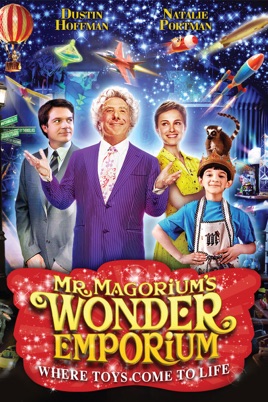
This film was cheesy, and kind of fluffy--but it was also cute and magical and so I kind of felt like it was a "guilty pleasure" for me. In this film, there aren't two separate worlds, but an unassuming toy shop in the "real world" seems to possess magical properties, as the toys themselves come to life and interact with the children who play with them, the impossible is possible, and it's always full of life and color and movement--until the Grumpy Adult comes to try and shut it down, showing an incredible lack of imagination, whereupon the shop loses its life and color, and the toys become dull, inanimate objects again. Therein lay the contrast of the two "worlds" in this film: one was dark and empty and still; the other bouncing, vibrant, and full.

Now here's the profoundness in the way such a quaint and silly movie taught a powerful lesson. Was it "Adults are boring and need to have more fun"? No. It could have taught that being impulsive and refusing to live by any sort of rules is the only way to live... but it didn't. Instead, my takeaway from the film was that "A life without imagination is no life at all." It wasn't that "rules are evil" or "believe that something will happen and magically, it will", but that within the set guidelines for cooperating well with others and functioning as a community, a little imagination is to be embraced as a way to enhance one's life, not shunned or feared as useless daydreaming. For me, that meant that allowing my mind to wander a little bit, as long as my ideas brought benefit and not harm, could actually serve to benefit me and others. I don't need to be ashamed of my ideas, or pursuing the fantasy and science fiction topics I am passionate about. A little whimsy makes the world go round!

3. Chronicles of Narnia
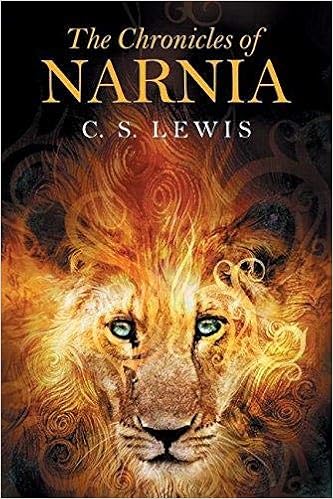
This series is perhaps the most foundational of all the fantasy I read and loved. I read these books over and over, almost to the point of memorization, and even went on to write my own spin-off fanfiction trilogy based on the series! In this series, the "real world" and the fantasy world--Narnia--are presented as in separate dimensions, accessible only through certain "portals", such as a wardrobe, or a magic ring. Four siblings pass many years in both the real world, and a few centuries in Narnia, growing learning, ruling, and every time they returned to the real world, it was as if no time had passed at all. Each book in the 7-book series features either a couple of siblings from this family, or later on a cousin and his friend, going back to Narnia and having adventures until the magic world literally comes to an end, with surprising implications for this world.

A lot could be said about the fact that the author of said series was an inquisitive theologian, writing a straight-up allegory disguised as a kid's fantasy adventure... but really, the impact it had on me didn't really surface until I was writing that trilogy I mentioned earlier. In the trilogy, the siblings are all older, and I really went after the contrast between the siblings who chose to still "believe" in Narnia, even when they were "too old" to continue returning there, and the one who ended up rejecting the whole idea, even scoffing at the others for still treating their experiences as real memories. I began to realize something very important that wasn't exactly mentioned in the original series, but implied. The lesson is this: "Just because an experience isn't 'true' or 'realistic' doesn't mean we can't learn from it and reap the benefit in our 'real world' life." The ones who still "believed" in Narnia took seriously the things they learned about leadership, about relationships, about good and evil--and in that way, perhaps they weren't "going" to Narnia, but they were living as if they had been.

The one who rejected it? She had learned much of the same lessons, but she chose to ignore them. If she couldn't accept the entirety of the experience, then she refused to reap any benefits from having gone--and her "real world" life suffered greatly for it. Where the others became more mature, and handled life with a little more grace because of their "fantasy" experiences, this other sibling traded it all in the vain pursuit of all the futile, short-term things life had to offer: fashion trends, the approval of others, and so on. I summed up the difference in this line I wrote for one of the characters: "Narnia may have been a fantasy, but the lessons I learned there were very real. Whether I really was High King for several years or not, that does not mean I cannot behave as one who has been king."

Some people shy away from reading most fiction--fantasy in particular--because they "can't see the point of it." To which I reply: The point is to learn "firsthand" important lessons about morality, courage, and other life and character lessons these fictional "people" might learn. So that one day, when you're faced with a situation that matches the one you read about... you know exactly what to look for, and what to do about it. Good fiction isn't just about escaping reality. It's about reconnecting with reality in a more meaningful way, learning from the mistakes of another person--albeit a fictional one--and getting the chance to "preview" a common interaction before it happens in your own life. At least, that's how I approach reading any sort of fiction or sci-fi: What are the characters learning, and can it benefit my life to learn the same lesson along with them, without having to go through the real-world "classroom" myself?

4. The Little Prince
 
This one is kind of more recent, since yes, we did have a copy of the book around the house growing up... but it had already fallen apart by the time I was reading, so I never remember seeing more than two pages of it together at one time, in various places around the house. Then Netflix made an adaptation, which I watched and holy buckets it was amazing and I cried. A young girl lives in a world with no stars, that values "essentialness" above all else, and she has as her goal to be "worthy" of acceptance by a boarding school that is the height of quality of life. She meets a rambunctious old aviator who lives next door, and he tells her the tale of the adventure he had when he met a young boy who identifies himself as The Little Prince. The stories he tells through the eyes of the Little Prince are so outlandish that the girl has trouble believing that they are anything more than stories--until the day she finally notices that some of the characters the Prince described match some of the people in the real world... including a grown-up young man who could have been an older version of the Little Prince himself. 

There's a whole lot that happens, but the lesson it contained took a little bit of thinking. I think the most important thing I carried with me away from that story is: There is a vulnerability and an extra level of perceptiveness that comes from allowing oneself to see the "little magics" of everyday things, and appreciate them for what they are, instead of trying to make them into this narrow view of what one might think they "ought" to be.

Think about it: All the characters in the "real world" were so focused on being "essential" that they would go out of their way to avoid anything the slightest bit disorderly or irregular. Everything was tuned to the Next Big Thing. For the little girl (and her mother), it was the scholastic acceptance. There was hardly a moment of the day that wasn't severely regimented down to the second, pointing toward that. The girl wasn't allowed to do anything that wasn't "essential" to meeting her goal. Humanity was reduced to small, colorless "machines" on a never-ending treadmill. It takes the constant brushes with the Aviator to bring the new perspective into the little girl's life, and it's by allowing herself to see life through the Aviator's eyes--and the eyes of the Little Prince--that she is able to see the world for all the possibilities it contains, not for it's "essentialness."

Then there's also the vulnerability part: These characters all grasped at the promise of security found in conforming to the "essential" worldview--and to do otherwise would leave them vulnerable to those who would exploit others for their own purposes. But is it worth being vulnerable, to escape the trap of blind compliance? What if life has more meaning than just being "essential"? What if the things we've convinced ourselves are essential--number crunching versus connecting with the world around us; pinching pennies and hoarding money versus counting our riches in friends and community; maintaining absolute control over our circumstances versus learning how to roll with anything life throws at us--actually ends up being pretty pointless, while those "nonessential" things are what make life worth living? To live is to be vulnerable--but we would not choose to be vulnerable that way unless we believed that the payoff (being able to see life from multiple perspectives, and adapt accordingly) was worth all that and more.

Who would have thought that a little 93-page "novelette" (shorter than the book I wrote!) would carry such a big, important message? At least, it did for me.

5. Inkheart
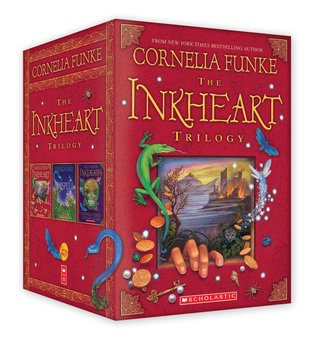
The last fantasy series that really impacted me would have to be the Inkheart Trilogy, by Cornelia Funke. The premise is that there are certain people with an almost magical ability called Silvertongues, who can read passages in books and bring objects and characters from the book world into our world. The flaw here is that whenever something is brought out of the story world, then something from the real world is drawn in to fill that space. The main character, Mo, ends up reading a book called Inkheart, and while he is reading, he ends up bringing out one of the villains from the book--and inadvertently, his wife ends up transported into the world of Inkheart. The book was pretty obscure, only a handful of prints left, so Mo has to use his trade as a book-binder to travel all around the world (along with his daughter) hunting down copies of Inkheart in order to find the one that describes his wife, so that he can read her back out again. But of course, it's not going to be that easy... Things are rarely straightforward when it comes to a rare fantasy world, and a villain who has found his niche in this modern world and doesn't want to leave--so much that he'll hunt down every copy of Inkheart himself, so that there would be no chance of the Silvertongue reading him back in again.

The lesson this book taught me wasn't so much a character one as it really influenced the way I saw and thought about writing stories. A Silvertongue's words hold much power over the fate of people--when they meet the author who wrote Inkheart, Mo discovers that if the author writes about his characters, and Mo reads them, it can alter reality for the characters, even in our world. The villain finds a different Silvertongue and gets him to read an entire village from "Inkworld" into ours, so that he can live in a place where he feels comfortable. I learned a lot about how to approach writing my own stories from reading this. I would say the most important lesson I carried away from Inkheart--the whole trilogy, as a matter of fact--is that there is an inherent power in storytelling that cannot (and should not) be underestimated. Stories have power, and repeating those stories increases that power.

The thing is, it doesn't just apply to fictional stories we invent in our heads, either. The term story can also refer to "things we tell ourselves about ourselves"--such as "That's just the way I am" or "I'm such a ditz", "I'm the best there ever was!" or even "Nobody wants to be around me." Stories have power, negative and positive. The might not have a beginning, middle and end; they might not even be coherent narratives--but all of us have the ability to manifest attitudes and make choices that result in certain actions that come from that inner monologue of "stories" we tell ourselves every day. So what story are you telling yourself? What kind of main character are you, in the narrative of your life? Will you be the hero, or the villain? Is your character worth emulating?

That's quite a bit of introspection from a simple children's series!

<<<<<<<<<<>>>>>>>>>>>

So there you have it. Five fantasy stories--each of them geared toward a younger audience, most of them extremely campy if I'm being honest--and each one carrying within them a powerful message that even adults can benefit from. While on the surface, fantasy can look rather frivolous and wasteful--something to do only when you have literally nothing else that you want to do with your life... If you look closer, you might find that even the most whimsical stories contain valuable truths that manage to integrate with the real world in very significant ways.

Thanks for joining me on this little jaunt. I hope you learned a thing or two about the way fantasy relates to the real world... Maybe the points I've made have given you a renewed appreciation for such a "pointless" genre? At any rate, enjoy the rest of the blog hop.... Your next stop will be hosted by Alexis Lantgen, who would love to tell you all about "Fantasy Integration in Saints and Curses"! Be sure to visit the CyCon website and Facebook events acting as the hub for all of our events. Sign up for the OWS newsletter or RSVP to the event to make sure you don’t miss out on any of the bookish goodness we have to offer.

Happy reading, and as always...

Catch You Further Upstream! 


Tuesday, September 15, 2015

Literary A-B-C's


If you have....
Related imageAslan in the Alley, or
Related image  Boggarts in the Bath,
  Related image Centaurs in the Courtyard,
Related image Dustfinger on the Dash—

Related image If Edmund eats his Eggs, and
Related image  Farid forages Fruits, while
Related image Glass men gild the Gas lamps, at
Related image  Hogwarts, in the Hearth;

Related image If Ix is Inconceivable, and
Related image Jadis is a Jerk; if
Related image  Kingsfoil by the Kilo leaves
Related image  Lothlorien in the Lurch;

Or learn that...
Image result for marvin android Marvin has a Migraine, and
Related image Nymphs are Nervous wrecks;
Image result for ophelia hamlet Ophelia is Overwrought, and
Related image  Puddleglum’s com-Plex;

If you play

Related image  Quidditch in the Quarry, with the
Related image  Redcaps splitting Rocks, you might see
Related image  Slartibartfast Slide on down, while
Related image  Treebeard stops to Talk;

If you've heard that....

Related image Underhill thinks he's Unique,
Related image Viola's twin is Very chic;
Related image Wizards wave their Wands apace at
Related image Xenophilius' disgrace. (X!)

Related image If Yorrick's buried in your Yard,
Related image And Zaphod's catching Zzzz's—

You know you might be saying
Your Literary A-B-C's!

References by Category:
The Chronicles of Narnia—Aslan, Centaur, Jadis, Puddleglum
The Spiderwick Chronicles—Boggart, Nymphs, Redcap
The Inkheart Trilogy—Dustfinger, Farid, Glass men
Harry Potter—Hogwarts, Quidditch, Wizards, Xenophilius
Hitchhiker's Guide to the Galaxy—Ix, Slartibartfast, Zaphod
Lord of The Rings—Kingsfoil, Lothlorien, Treebeard, Underhill
Shakespeare—Edmund, Ophelia, Viola, Yorrick

Sunday, July 5, 2015

Sunday Musings: When Eustace Was A Dragon


I had a fight the other day.
It was a conflict of opinion, a clash of personalities (if you will), and the other person was being "insensitive" (I felt) so I went with a knee-jerk reaction and dished it right back out at them. In their face! They should know better than to argue with me or expect me to act in a way more suited to who they want me to be. I'm a deep-thinker and highly sensitive; I react strongly to being told I am wrong. 

IT'S JUST WHO I AM.

My personality type.
My zodiac sign.
My sixteen-point profile.
My "spiritual gift."
ME.

I have been wrestling with this concept and the inherent issue for quite some time, and I just recently got some new inspiration, so I am hoping that by trying to organize things in this blog post, I may be able to make sense of it for myself, and perhaps help others at the same time.

THE CONCEPT: Who We Are

Who are you? How would you describe yourself to a total stranger? An online acquaintance? A prospective employer? A prospective date? A friend? A long-lost relative?

How would you describe yourself to God?

The thing I have noticed in all these personality quizzes that are taking social media by storm, the thing I observed in real life that brought on this problem is that:
All the quizzes in existence have a limited number of results. And none of them will be completely, 100 percent ME.
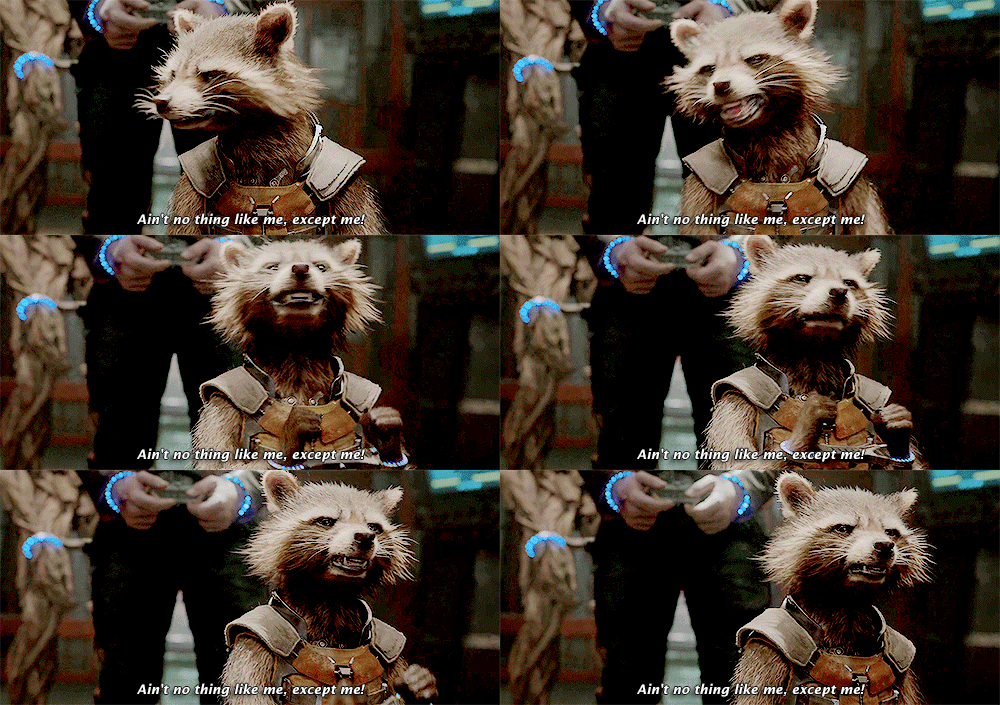
As Rocket says...

And we are okay with that. 
I kid you not, one quiz, I knew exactly the outcome I wanted, and I knew exactly how to choose my answers to get that outcome—and I got what I wanted.
Getting into a box is very easy, no? You just have to go through the motions. Give all the right answers, whether you believe them or not. Either that, or your choices are A, B, or C. You can't just go and make up a choice M because it would be more accurate. So you pick the "lesser of two unrelatables" because it's cool or it's the best option the quiz has to offer.

But how does this play out in real life? It's not as easy to fake your way into a "box" with actual live interactions. No, there is where the real you comes out; the "you" that is unlike anybody else. The "you" that is so engrained into the very fiber of your being that your first response is as reflexive as a knee jerk.

See where I'm going with this?

We each of us have an identity in ourselves. That identity is as much a part of us as our own skin. It's as much a part of our actions as breathing, and requires about as much concentration. We can no easier ignore this identity of ours, with its drives and its flaws, than we can peel our own skin off down to the muscle. We end up with these reactions because we don't want to think about what our response is doing to the other person. That takes a level of personal responsibility that requires NOT thinking about our own feelings for a moment—and that's not something we want to give up.

Side note: May I make an extra point here that identity has nothing to do with gender? In this day and age, when people are trying to say that gender is just a state of mind—to which I say: "You can swap the gender, but the person will still have the same problems." A vain, self-absorbed, unrestrained, discontented man will become a vain, self-absorbed, unrestrained, discontented woman. The appearance changed, but the identity did not. (Just a passing thought, with not as much weight as the rest of this post... But still something to consider...)

THE ISSUE: When We Are Redeemed

The issue, once we've identified ourselves, is then what we do with that identity; how we use it to excuse ourselves when we are being rude ("It's just how my brain works!") or selfish ("I can't help who I am!") or greedy ("I need to be treated in this way or I don't feel loved!") and justify our behavior ("It's just who I am! You're asking me to change myself?") in pride—
There's the problem with this. I cannot see that the way I am acting is "wrong" if it feels "right" according to "my personality."

In thinking about this issue of identity, I suddenly recalled the scene in "The Voyage of the Dawn Treader," when Eustace visits an island and "becomes" a dragon.

We can all look at the fictional character's behavior in the book and agree that, if there ever was an anthropomorphic dragon, he would have the same reactions and behaviors as Eustace.
What if I concluded, then, that the magic on the island didn't turn Eustace into a dragon, it manifested the dragon that was his true identity? If you recall, he still had all his memories and human cognizance he was the same Eustace on the inside. Only his appearance had changed.

Eustace is us; there will come a time when we will, if we do not deal with it, become the very thing we fear, the thing we do not understand–and yet something we recognize all too clearly as what was deep inside us suddenly bursts to the forefront overnight, creating chaos and driving away those closest to us.

What happens when we are redeemed?
It's a word that those of us who have heard the Gospel and believed understand. We Christians are familiar with the concept: Jesus Christ redeemed the souls of anyone who would believe Him and place their faith in Him as Lord, and He did it by dying by crucifixion and taking the blame for our sin in the eyes of His Father, the Almighty God. God recognized the sacrifice and the shed blood of His Son as full payment for the judgement that we had earned by the mere fact that we were born with the personalities and the proclivity to know what it meant to behave the way He wanted and do the opposite: live for our own comfort, success, and the pursuit of what makes us happy.

Back to Eustace: what happens once the dragon is manifested? If you've read the book, you know how it continues. Eustace encounters Aslan (the allegorical representation of Christ) and is instructed to "undress."
In other words, he must remove his own skin.

Remember what I said about our identity being part of us like the skin we wear? Early societies believed the seat of the person to be somewhere among the internal organs, like the heart. I say "skin" when referring to the identity of our person because it is an incredibly resilient organ. Burn it, slice it, stretch it, pierce it—it will always grow back. It is constantly refreshing itself, but we never notice because in the absence of any drastic and direct changes to affect the growth, the new is just about the exact same as the old, right down to the cellular level. Plus, it's the only organ not relegated to one area, but spread out over the entire body. It's the thing keeping our insides from becoming our outsides. It's the first line of defense our body has so that the very air around us doesn't poison us. Without our skin, we would just be a pile of innards and bones, barely contained in muscle, tissue and tendons. 

Without our identities, we wouldn't know ourselves from any other.

Sure gives a new meaning to what you may have (till now) assumed was a children's book, doesn't it?

Anyway, Eustace is on the path to redemption, trying to do his almighty best to oblige Aslan and get his skin off—but every time he tries, there's always another layer. 
I highly doubt Lewis was implying solely that the human personality is comprised of layer upon layer of complexity, even in one's own view of oneself. What he may have been implying was that, in all of the self-driven efforts to follow God's direction when He wants us to "put off the old man" as Paul says (Ephesians 4:22-24)—there's always a part of ourselves that we have become blind to, a skin-within-the-skin that we don't even know is there. We can't see it, but it is the root of our identity, and as long as it's still there, our personality will not change. As long as our personality doesn't change, we aren't really doing that "putting off" thing that God wants, so that He can "put on the new man" and give us fresh clean identities to replace our ugly, knobby dragon scales. 

Aslan didn't just wash away the dragon scales to reveal the boy underneath. Our identities as redeemed believers and Christians come from a different Source than our first identities did.

When Eustace finally figured out that he couldn't ever possibly "undress" to satisfy Aslan's requirement, Aslan Himself steps in and strips all of the skin clear away, down to the bone. (The Disney movie did not do it justice; it was more vivid in the BBC miniseries version, but also poorer cinematic quality... Bugger...) Eustace describes this last skin as deeper and darker and so much more revolting than the others. But once Aslan had essentially removed all of his dragon-skin (meant to represent his sinful identity, remember), Eustace is then available to receive a fresh new boy-skin.

Putting off, and putting on. I never understood it before. I was like Eustace, trying to unburden myself and discard the nebulous "sin nature" for which I blamed all the mistakes I was making. But in reality, Jesus–like Aslan—stood there beside me and said, "Let Me do it this time, child." Paul talks about it like it's our job, but really, we are only allowing Jesus to do the work of putting off and putting on; it really is the most effective method.

Eustace with his fresh boy-skin given to him by Aslan after He had removed the old dragon-skin is markedly different than the Eustace that had been at the beginning of the book. Lewis takes care to point that out several times in the rest of the book. Some might attribute it to his having "learned his lesson"—but what if it was because the "new skin" carried a sense of new identity with it? After all, if this story was meant to be an allegory, it wouldn't do to represent Jesus as this mystical being whose purpose it was to merely "teach lessons" like another Confucius or Buddha. He came to CHANGE DRAGONS INTO BOYS.

CONCLUSION: What Has Christ Redeemed?

Recalling how Eustace described his old skin reminded me of a quote from Lloyd Alexander's "Book of Three":

"Once you have courage to look upon evil, seeing it for what it is and naming it by its true name, it is powerless against you, and you can destroy it." (p. 216)

Now, this leaves a divine force out of the picture entirely, but the concept, I think, is key to understanding how we have been redeemed, and what to do about the sin that still crops up because, unlike Eustace, we haven't turned into dragons yet, so our "skin changing" actually happened on the inside, which makes it harder to recognize.
The key, according to the quote, is having the courage to identify any responses, attitudes, thoughts, and behaviors that a redeemed person should not have, to call it for what it is, and cling to our redemption from that thing. Once we disown these things, it is gratifyingly simple to let Jesus step in and remove our propensity toward that habit, replacing it with His own corresponding response.

Think of it this way:

If I have been redeemed, but I still claim the right to get angry when my preferences have been violated and my comfort is in jeopardy—has Christ not redeemed my attitude?
 
If I have been redeemed, but I still like to entertain certain thoughts and desires because "that's just the way my mind works"—has Christ not redeemed my mind?
 
If I have been redeemed, and yet I still argue and demand validation from people, engage in gossip and slander, and I reserve my right to complain about my circumstances because "It's just my personality"—has Christ not redeemed my habits?
 
If I have been redeemed, yet I remain belligerent, defiant, prideful, and say hurtful things to others and about others, but pass it off as "It's just the negative side of my spiritual gift"—has not Christ redeemed these gifts He has designed not for my own ego or my own fulfillment, nor the disparaging of others, but for their encouragement?

We know good and well when our behaviors and choices hurt someone else. When we chalk these negative attitudes and behaviors as "who I am," it is disregarding the "new skin" we have been given. When we can realize that Christ has redeemed WHO WE ARE IN OUR MOST INSTINCTIVE RESPONSES, we should then be able to see clearly enough to choose "redeemed" over "born this way," and the more we do this, the more it allows our habits and attitudes to be changed by His redemption, and we can recognize those bad habits and attitudes for what they are, and break the cycle.

My pastor told a story in his sermon on this point. I'm not sure of the source, and I missed a bit of the story, but as much as I can remember, it goes like this:

There was a man with a habit of sleeping around with different women. By and by, Christ redeemed him, and he began to respond to the adulterous urges less and less, so that they no longer were a part of his desires. A while later, he happened to cross paths with one of the women he used to visit regularly—but this time, he passed her by without a second glance.
"Hey!" She called after him. "Don't you remember me?"
"I remember who you are," he replied, "but I am not me anymore."

Friends, if we have been redeemed, WE ARE NOT OURSELVES. The less we avail ourselves of that excuse, the more we are able to adjust to the new "skin" Christ has given us, and become more and more like real boys instead of dragons.


Saturday, June 27, 2015

Serial Saturday: "The Telmar Trilogy, Vol. 3: "The Legacy of Telmar" Part FINAL

Susan laughed again, "Oh! That's the fun of it! Benton is going
on a holiday for a whole week in France, and he invited me to go with him!"

The Pevensies and Melanie sat at their last breakfast in the Ketterley House. No one spoke, but each ate silently. The telephone broke the silence with its grating ring. Peter answered it.
"Hello?"

"Hello, Pete; this is Susan."

Peter picked up his head, "Susan? Where are you?"

Susan laughed carelessly, "Oh, don't fret, I'm fine. Say, I want to apologize for not coming over and speaking at graduation. I would have, but everyone was leaving to a party that I'd completely forgotten about, and so of course I had to go with them. I do appreciate your being there, though."

"Susan," Peter interjected, slightly irritated, "Where are you?"

"Peter," Susan giggled maddeningly, "are you concerned for me? Don't worry, dear! I'm perfectly safe. I'm with Benton."

"Susan, you shouldn't be with him!"

"And why not?" Susan's voice dropped its light, affected tone. "He's perfectly responsible. Actually, he's part of the reason for my call, because I am saying goodbye!"

"Goodbye? Where are you going?"

Susan laughed again, "Oh! That's the fun of it! Benton is going on a holiday for a whole week in France, and he invited me to go with him! And so, dear brother, I'm saying au revoir to you all! I promise to send postcards, darling! And I'll be sure to keep my eyes out for some little gift at a real French shop. Oh! Speaking of shops, tell Lucy I was in Blume's the other day, and they had the most gorgeous little skirt that I think would look divine on her! She does so need new styles, poor little chick! Give her my love . . . oh, and that deaf girl, if she's still around. Funny how I found her all those years ago, and she's nearly part of the family now!" Susan broke off with a giggle.

"Susan, why are you leaving now?" Peter asked quietly when Susan finally ceased her prattle. "Lucy misses you; can't you come say goodbye in person?"

Susan was silent for a long time. "Oh!" she sighed at last, "I would, but there's the ship now! I'm off! I will write, cherie! Farewell!"

Peter heard a click, and silence on the line. He hung the telephone back on its cradle. Susan was gone.

"Peter, was that Susan?" Edmund asked.
He nodded.

"What did she say?" Lucy wanted to know.
Peter did not turn around, and there was an uncharacteristic slump in his shoulders.
"She said goodbye," he said, and left the room.

Everyone pitched in, and all the Pevensies' belongings were packed and ready to be loaded into a cab. The telephone rang again, and Peter picked it up, hoping it would be Susan.

"Hello, Peter." It was old Professor Kirke.

"Hello, Professor," Peter sighed.

"You sound rather disappointed. What happened?"

Peter told him that Susan had left them.

"Oh, that's too bad; say, why don't you all come out to the cottage, and we can have a Narnia dinner this evening? It would cheer you up, I think. Bring your cousin and his friend, too."

"Why, sir?"

"Well . . . because I think it's high time we all got together for a good talk."

Peter sensed something else in the Professor's tone. "And?" he prompted.

Professor Kirke sighed, "I seem to have this feeling that you are . . . somehow wanted. Will you come?"

"I think we might be able to; say, four o'clock?"

"Four o'clock it is, then. Polly and I will meet you at the station."

"All right; goodbye."

"Goodbye, Peter."

Accordingly, the Pevensies, Eustace, and Jill all met at the train station and traveled out to the country, where the Professor and Aunt Polly met them immediately upon arrival. The boys loaded the luggage into the back of the Professor's rickety auto, and they set off down the long lane to the Professor's cottage, where he had lived ever since his larger house—where the Pevensies had such adventures in the magical wardrobe—had burned to the ground.

The girls and Aunt Polly set about making supper, and soon all was ready, and they made a fine meal of it. As you would expect, the conversation soon turned to Narnia, and Peter was pleasantly surprised to find that remembering old times and grand adventures diverted his mind from his frustration against Susan's foolishness. If she had been at dinner that night, I'm sure everyone was in such a mind to forgive and welcome her on the spot. However, a guest of quite a different sort was to appear that night.

Everyone had finished supper for the most part, and were still chatting when the three younger kids jumped to their feet, Jill with a little scream of fright.

"What is—" Edmund began, but the question died on his lips when he followed their gaze to what they saw.

Polly gave a little gasp when she saw it, and the Professor jumped and knocked his glass off the table. There was a ghost sitting right across from them!

Peter clenched his hand as he had gotten in the habit of doing at school, to steady his voice. He commanded the ghost, "Speak, if you're not a phantom or a dream. You have a Narnian look about you, and we are seven friends of Narnia."

Melanie, putting away dishes in the kitchen, nearly jumped out of her skin when she heard someone yell.

"I am King Tirian of Narnia!"

She ran into the dining room. A few of her friends were on their feet, and everyone was staring at one side of the table. There was a ghost! It's back was toward Melanie, but she could hear it speak.
"Narnia is in grave danger! Please help us!"

Peter jumped to his feet. Melanie saw his lips move, but she realized that, though she could hear the king, she was still deaf in England. Perhaps they could not hear him! She ought to say something, but what—
Before anyone could react further, the ghost of King Tirian faded and disappeared.

Melanie finally recovered her senses. She ran to the table. Everyone was talking with wide eyes. Melanie tapped Edmund on the shoulder. Why do you sit here talking? She signed, Narnia is in danger!
She did not understand the look of total shock he gave her. How do you know? He signed.
She furrowed her brow, Because the King said so!
Edmund's mouth dropped open, You heard it speak?

Melanie nodded, and Edmund whirled around and announced this to everyone else. She could see him explaining that though she was deaf, in the Narnian world she could hear.
Peter turned to her, What sort of danger?
Melanie shrugged, I do not know; I could not ask.

How she wished she would have! But there was no help for that now. There remained only one thing to do: find a way to save Narnia!
 >>>>>>>

How will they save Narnia? What will become of Melanie? Click -->HERE<-- to find out! 

*Note from the author: This may be the last post from The Telmar Trilogy on The Upstream Writer--but it certainly isn't the end of the story. Listed below, you will find the links to two possible endings I wrote, having nearly the same events, just different characters involved. If you would be so kind as to read both and comment with which ending you liked best, I would be very grateful! Hope you've enjoyed this series as much as I have, and I certainly hope you'll stick around for the next one! -Leslie


Saturday, June 20, 2015

Serial Saturday: "The Telmar Trilogy, Vol. 3: The Legacy of Telmar" Part 11


[Excerpt from Chapter 24] 

Lord Samson entered as the Lord and Lady stood and bowed in respect to him. He nodded and hurried forward.
"To what do we owe this unexpected honor of your presence, Milord?" Martan inquired.
Lord Samson's eyes darted from corner to corner of the room. "Lady Melanie, have you received a letter from His Majesty the King?"
Melanie held up the paper. "It only just arrived. Why does Your Lordship have cause to be ill at ease?"
"May I read it?"
Still puzzled at the Lord Protector's agitation, Melanie allowed him. He glanced over it with wide eyes. Once he finished, he produced from a pouch at his side another letter like unto Melanie's.
"Read that, Milady, and you will see what sort of man is the King."
Melanie took it and read:

To Lord Samson, Protector of the throne in Telmar:

Word has reached me concerning your recent display of untoward sympathy for the proponents of pagan, fantastical fairytales of mystical beings and talking animals. I hope this sympathy is not a reflection of Your Eminence's personal inclinations.
It is in Your Eminence's best interest to immediately disregard any further displays of this nature, and furthermore to see that all mutterings about such things are suppressed, that this land you profess to protect may indeed be protected from such insidious fabrications.
If you do not intend to heed this suggestion, I have requested the presence of the Lady of Nast before me in two days; accompany her on her journey to Narnia, that we may discuss the matter further.

In the Mighty Name of His Royal Highness,

King Caspian VIII

Melanie pondered this second letter deeply. It was certainly a different tone than her letter!
She looked up at Lord Samson. "One letter is kind and caring, but another is stern and menacing. Which is the real King?"

Lord Samson sighed. "The latter, I am afraid. Both letters taken together testify to the cunning nature of the King. He can speak to you in words of sweetness and understanding, and draw you in, then condemn you to death, using your own words against your harshly in the next breath. He does not hesitate to remove anyone who believes or speaks contrarily to him. I have known such freedom in the knowledge of Aslan which you introduced to me, but I fear," he gulped, "I fear the cost of such freedom, and so I confess I intend to write a letter of apology to the King. Perhaps then I can convince him that you and I are not a threat, and we can continue as we have been, without his knowledge."

Melanie shook her head. "Obviously such subversiveness does not work, for someone has been informing the King already without our knowing it. I personally believe Aslan is even now at work. I am inclined to comply with the King's summons. Come with me! Perhaps we will have unexpected opportunities even en route to Narnia to witness for Aslan. One person is powerful indeed, but just imagine the power of two testimonies!"

"Melanie," Samson cried, "If I have guessed His Majesty's intention aright, his invitation is merely a means to lure us out, to kill us, and replace us with ones more loyal, and haters of Aslan. I have seen the failure of the rulings of such men, and it pains me to think of what they would do to Nast and to all of Telmar. Please do not be so foolish as to leave Nast in the hands of men like those!"

The mention of death scared Melanie. She had never considered it. Could she actually die here in a different world? Would the Pevensies know what happened to her?

The slight hiss of the lamps lighting alerted Melanie to the approach of evening.
"I must return by nightfall," Lord Samson said, "but please, Lady Melanie, Nast needs you!"
"I will consult Aslan in the night, and what he decides, I will do."
"Aslan be with you, Milady," Lord Samson said.
"And you also, Milord," Melanie replied.
>>>>>>>>

[Excerpt from Chapter 25]

"I have decided . . ." she said slowly, "to go to Narnia."
Martan's heart jumped from his bowels to his throat.
"No!" he choked, "Melanie, please don't go!"
She continued, "I hereby bequeath upon you full Lordship of Nast, and officially end the line of Lord Steward."
"Melanie," Martan cried, "please listen to me. Ever since I first met you, I have loved you."
Melanie stopped and stared at him, not quite sure what she was hearing. "What?" she gasped.
"I see in your purity what made my grandfather so willing to wait for you. You are kind, gracious, noble, honorable, and such qualities only enhance your physical beauty!"
"Milord!"
"Nay, call me Martan! Melanie, I have watched you all this year, and have seen how, though you could have turned me out of the palace immediately upon your return, you chose instead to welcome me as a partner in rule. Melanie," Martan dropped to one knee before the blushing lady on the throne, "I would be honored beyond words and fulfilled to the uttermost if you would consent to stay here, and become my wife."
Melanie felt her whole world tilt wildly! "Martan," she cried, flustered, "I could have been your grandmother!"
He shook his head, "Yet some miracle has kept your appearance from fading, and you do not look much older than I am! Please Melanie! Do not throw away your life like this, I beg you!" He clasped his hands and raised them pleadingly.
Melanie felt the rush and flush of her spirits rising and falling at the same time.
"Martan," she said resolutely, though her chin quivered a bit, "I confess I have admired you as well. You have shown promising fortitude and great judgement in this last year, and I have greatly valued your friendship toward me."
Martan looked up, his eyes hopeful. "Then you accept my proposal?"
There was no mistaking the pain in Melanie's eyes as she said gently, "No, Martan. It is Aslan's will for me to go."
"No! It can't be!"
"I am afraid it is. Aslan appeared to me in a dream last night, and said that I should go," her voice caught and dropped to a near-whisper, "and that I shall never see Telmar again once I leave."
[…]

Melanie left Nast. The carriage rocked back and forth. Her thoughts turned to Aslan. He said she would never see Telmar again. Perhaps he did not mean she would die. What if, on the contrary, she returned to England from Narnia? Melanie sighed; optimistic, but impossible. She might as well prepare for her death. She remembered what Lord Samson had said about the diabolical King Caspian VIII. It would not surprise her if he intended men to murder her en route! Why else would he order her to come in a closed carriage? It created a scenario with the perfect alibi. Perhaps her only option—if she indeed intended to play the heroine and witness to someone on this journey—was to share her testimony with her murderers, if they even let her speak or listened to her.
The carriage slowed to a stop, and Melanie's heart jumped into her throat. She felt suddenly ill. Had her time come? It was certainly too soon to have reached Narnia; Melanie was positive they could not have even reached the borders of Telami!
She heard a footman jump down and open the door of the carriage. Melanie was surprised to see pitch-blackness outside when it ought to have been the middle of the afternoon. Perhaps more time had passed than she realized.
An unseen hand gently supported hers as she disembarked the carriage onto—
A wood floor?
Instant silence pervaded. Melanie could hardly see; it seemed a likely place for a murder to happen. She felt something weighing from her wrist, and a square, flat wooden block under her arm. A bright flash of light caused her to whirl around. There was a small, round window behind her. Where had it come from?
She crept toward it making absolutely no noise at all. Something struck her arm when she raised her hand to the window. What was it? A burlap bag, suspended from her wrist by a drawstring. Where had she gotten that? There were small objects inside it. Melanie pulled one out and held it up to what little light came through the window to see it.
Lightning flashed again outside, and in its brief light, Melanie discerned the shape of the object: the miniature wooden bust of a horse.....

What happened to Melanie? 
What will become of Martan and the rest of Telmar?
Click on the links above to find out!


Want more access?

The Telmar Trilogy, Vol. 1: "The Legend of Telmar" (Part 1)
The Telmar Trilogy, Vol. 2: "Her Ladyship of Telmar" (Part 1)

Saturday, June 13, 2015

Serial Saturday: "The Telmar Trilogy, Vol. 3: The Legacy of Telmar" Part 10

"It did not occur to her until later that evening what she had done...."

[Excerpt from Chapter 20]

From that day forward, Mrs. Lefay developed an intense, mysterious fixation with "going back." She couldn't remember, no matter how hard she tried (not even with magic), where she came from, but she desperately wanted to go there.
After a week of hard thinking, she recalled the word "tree," but it could not be said if she lived upon a tree, under a tree, around a tree, beside a tree, or even within a tree.
She began leaving her house more often, to search for a "way back." The police brought her back to the Ketterleys' once, saying they found her in the park, feeling the trees, sometimes shaking the smaller ones. She spoke of that incident sadly, and as if she thought the trees should have had voices.
[…]

Mrs. Lefay tried to walk down the street, but her feet kept getting in the way. What is more, the whole road just wouldn't hold still, but rolled up and down like a stormy sea. Perhaps she needed more of the tarven's brew? She took another drink. It was like liquid fire in her throat! Mrs. Lefay moaned in pain.

Something crossed her path; what was it? Her eyesight was blurry. It was only a common, stray cat, but in the old woman's intoxicated brain it grew to the size of a lion. Instead of a mangy stray, Mrs. Lefay saw the Great Lion!

"You!" Mrs. Lefay rasped as the world tilted beneath her. "You've done this to me! It's all your fault!" Angrily, she threw the first thing she could find at the Lion: the bottle in her hand.

The crash almost jolted Mrs. Lefay from her stupor. She blinked and the Lion disappeared. In its place, she saw what she had done: The bottle had crashed through the window of a jewelry shop. Its contents, the brown "medicine," cascaded over the displays, drawing her attention to the object in the center: a ring.

Yes! That was what she needed! A ring brought her there, a ring would certainly send her back! The jeweler was in the back room, and thus it appeared that the store was empty, but even that did not deter the inebriated Mrs. Lefay as she grabbed the ring and headed down the street to the Ketterley house.

Andrew had just stepped onto the porch when she neared the house. She waved to him and shouted, "Yoo-hoo!"

The young boy glanced up just in time to see a crowd of policemen closing in on the woman. He ran down the steps toward her, hoping to reach her before they did.
Too late! They surrounded her just as he approached. "Mrs. Lefay!" he cried.

"Andrew!" the old woman gasped, "Andrew!" She pressed something into his hand. "Save this for me; it's my way back," she said, and they dragged her away.

Andrew looked at the object in his hand. A ring sparkled up at him.
>>>>>

[Excerpt from Chapter 21] 

"Mrs. Lefay: Guilty on charges of vandalism, disturbing the peace, violence, and mental instability. Sentence, seven years!"

The judge dropped his gavel, and it was final. With a last pitiful glance at Andrew, Mrs. Lefay allowed the bailiff to lead her away.

Andrew sulked all that day, and would have remained thus for all seven years, but his parents sent him away to boarding school. He would have forgotten the crazy old woman, but it happened that he was home for a holiday when they released her. Andrew, now grown to a young man of nineteen years, departed to see his old friend straight away.

He knew the moment he entered her old room at the Burgundy Place: she was dying. How weak and haggard she looked against the pillow! She made neither movement nor sound as Andrew meekly approached her bedside and laid the ring before her on the coverlet.

The instant she saw it, her eyes gleamed. "Can this then be the hour of my release?" she breathed. Mrs. Lefay seized the ring triumphantly. "You wonderful boy!" she cried, "Now you will witness the truth about me!"

"What do you mean?" Andrew asked.

Mrs. Lefay smiled on him. "Look at me, Andrew. Do I seem as one of your fairies?"

Andrew shook his head, but then he caught her meaning. He stared at her in awe. "Truly, Mrs. Lefay?" he breathed.

The woman nodded. "Yes; this old mortal soul has fairy blood in her veins. Let that be a lesson to you, young man! The most ordinary humans may have fairy blood in them, anyone from a charwoman to a duchess! I myself am among the last of that exquisite breed." And she sighed over the fate of her race.

"But Mrs. Lefay," Andrew gasped, "why do you tell me this now?"

Mrs. Lefay grew very sad again. "I am ill, Andrew; I expected to die soon. But now that I have the ring . . ." she paused to gaze at it glittering in her palm.

"What will the ring do?"

The old fairy-woman frowned upon him as if she thought him a dull schoolboy asking silly questions. "It was by a ring I came here, and it is by a ring I shall go back." The frown disappeared and she smiled at him again, "and because of your faithfulness to me, you, Andrew Richard Ketterley, shall have the honor of witnessing this great event!"

Andrew's eyes glowed at this prospect. Imperiously, Mrs. Lefay held up her hand in front of her face. "Behold my departure!" she cried, and slipped the ring on her finger.

Nothing happened, though boy and woman waited with bated breath.
Disappointed, Mrs. Lefay handed the ring back to Andrew. "Oh dear, it's only a common ring, nothing magic about it at all! That won't do. Please be so kind as to return it for me, Andrew."

Andrew was puzzled. "You mean, the ring does not belong to you? Where did you get it?" When she told him the name of the jewelry store, he cried in alarm, "Why, you did not steal it, did you, Mrs. Lefay?"

"Of course not! I had every intention of putting it to good use! If I wasn't so ill, I'd return it myself."

Because of their relationship, Andrew was loath to think badly of Mrs. Lefay, so he did not notice her deliberate dodge of his question. He accepted the ring from her hand. "But how am I to return the ring without being seen?"

Mrs. Lefay got a queer glint in her eye. "For a long time, we have talked about magic, haven't we, Andrew?"

The young man nodded.

"And you remember all I have told you about making sure that you remain in control over it, and use it to your advantage, but not for evil purposes, don't you?"

He nodded again.

"Well, since you do, I think you are ready to know some real magic."

He looked up and grinned craftily. "Really, Mrs. Lefay?"

She nodded. "When you reach the store, say these words, and no one in there will even notice you at all."

She gave him certain words to speak (but I shall not print them), and he departed.

It did not occur to her until late that evening what she had done. She recalled Aslan's prophecy as clearly as if he were in the room, repeating it to her: "Your offspring will learn of your magic, and bythat knowledge a great Evil will come to Narnia."

Every memory she had of her Narnian life came rushing back in one awful knell.
"No!" Mrs. Lefay screeched, "Curse you, Aslan! Curse your prophecies!"
>>>>>

What will become of Mrs. Lefay, and young Andrew--and the box? Follow the links to find out! Meanwhile, back in Telmar....

[Excerpt from Chapter 22] Melanie stared at the paper in her hand as she sat on her throne in the palace of Nast. It was a letter from the King himself in Narnia!
 
To the Lady Melanie, Regent of Nast,
Greetings from His Highness, Caspian the Eighth, King in Narnia;
 
I have heard of your faithful work, how you have served my country with miraculous success, even though it is not your native land.
 
This letter is meant to congratulate you for your diligence and commitment to excellence.
I have also lately learned of your beliefs, which are unfortunately rampant here in Narnia.
 
I, King Caspian, therefore invite you most cordially here to my castle in Narnia, that I might show you the birthplace of that which you believe. I would also be most interested to converse with you more about this singular form of spiritism.

In the Mighty Name of His Most Regal Majesty,
King Caspian VIII